




Before You Apply: What You'll Need
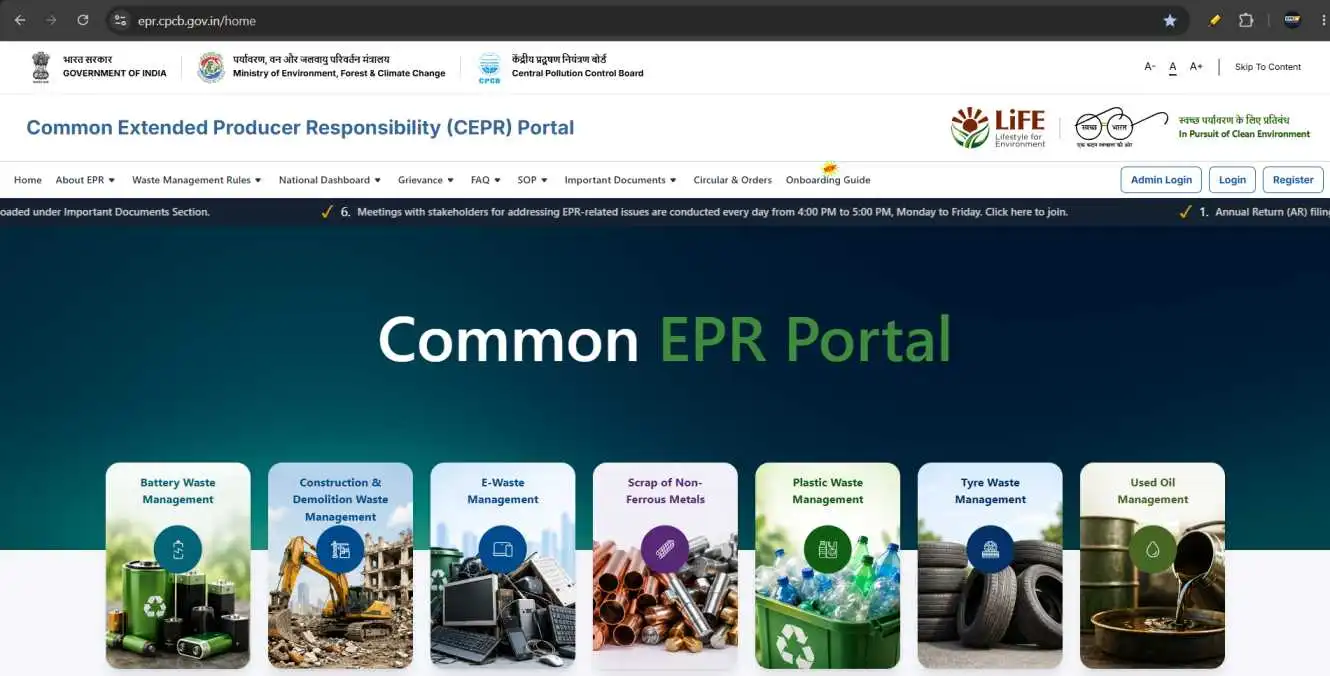
This guide walks through the actual CPCB registration process step by step. If you're still confirming whether your business needs to register at all, or want to understand what the certificate itself covers once you're approved, start with our EPR Certificate guide instead — this page picks up from "yes, I need to register" and takes you through to approval.
Before you start: Have your GST certificate, company PAN, and product/category details ready. Missing documents are the single biggest cause of delayed CPCB approval.
What you'll need before you begin:
- A registered business with a valid GST number
- Your waste category identified — plastic, e-waste, battery, tyre, or used oil
- Annual production or import volume estimates
- A recycler or PRO tie-up in place, or a plan to arrange one